Construction Digital Marketing Strategy for 2026

A construction digital marketing strategy lines up SEO, paid ads, content, and email around one goal, a steady stream of qualified bids. General contractors, remodelers, and specialty trades build one once referrals stop filling the calendar. The strongest plans start with clear numbers, then pick channels, budget, and content to hit those numbers.
A Team Built Around Every Channel:
Our 25 specialists at MKT360 cover strategy, content, paid media, and automation for 180 plus clients. We hold 15 plus platform certifications and stay fully channel-agnostic, so our advice follows your project mix, not a vendor deal.
Need a Construction Marketing Plan That Performs?
Reach out for a construction marketing strategy service built around your real bid pipeline, not a template. We map channels, budget, and content to how your crews win work.
What Is Construction Digital Marketing, and Why Does It Need a Strategy?
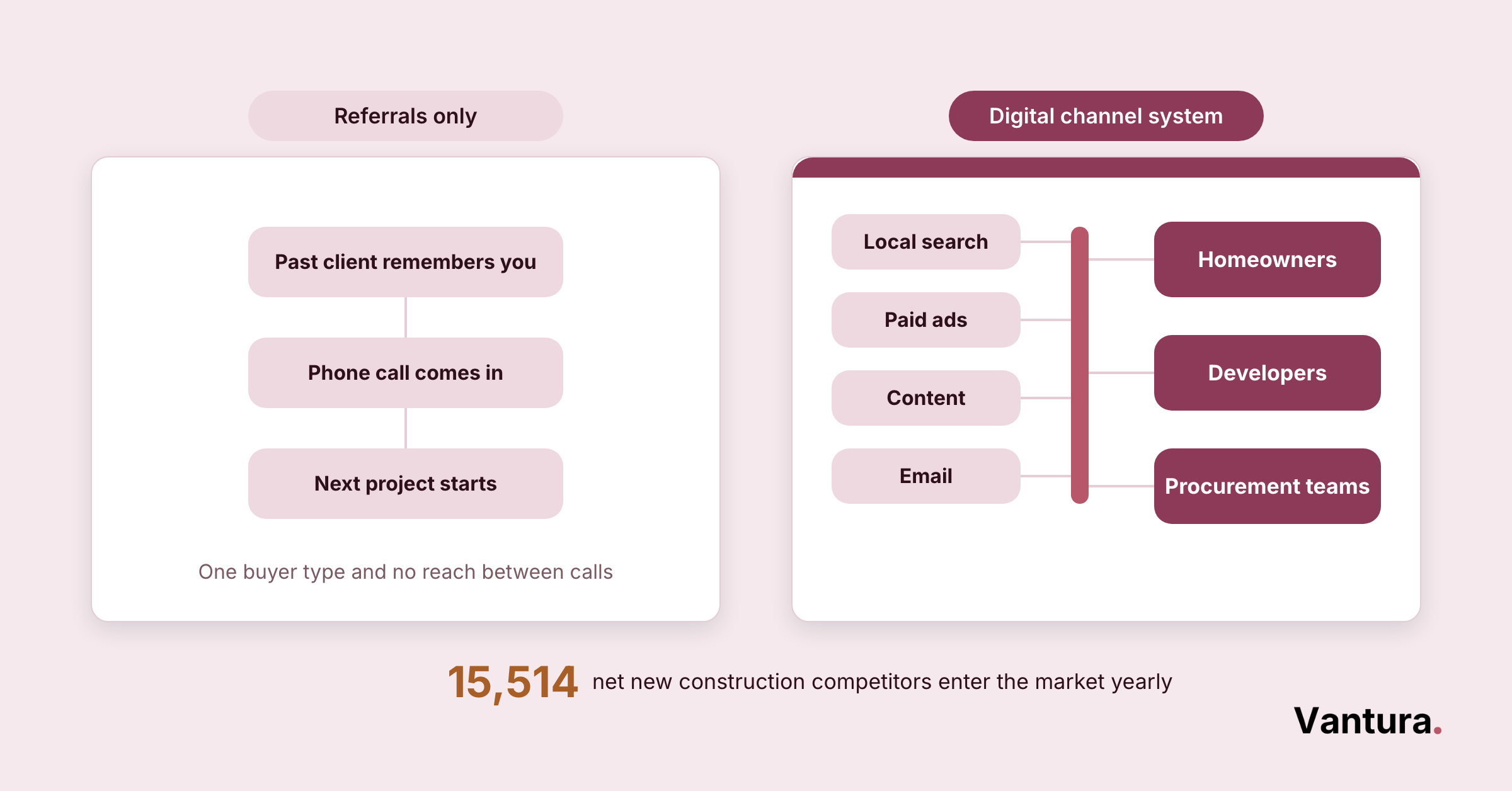
Construction digital marketing covers every online channel a contractor uses to win work. It spans a Google Business Profile, paid search, content, and email.
It replaces the old habit of waiting for a call from a past client. Instead, it builds a system that reaches homeowners, developers, and procurement teams.
A strategy matters because construction sales cycles run long and cost a lot to fill with guesswork. Without one, budget drifts toward whatever channel a sales rep pitched last.
There is also no way to tell a slow quarter from a broken funnel. That is why many firms start with a focused small business marketing plan before adding anything else.
Worth knowing: most construction firms run on referrals for years before growth stalls. A digital strategy does not replace referral work. It gives the business a second engine that keeps running during a slow referral season.
What Digital Marketing Channels Do Construction Companies Use?
Most construction firms lean on a handful of channels that match how buyers search for a builder. Local search, paid ads, and reviews carry the most weight.
Content and email support the slower research phase that comes before a call.
- Local SEO for “near me” and city plus service searches
- Paid search for high-intent, ready-to-quote traffic
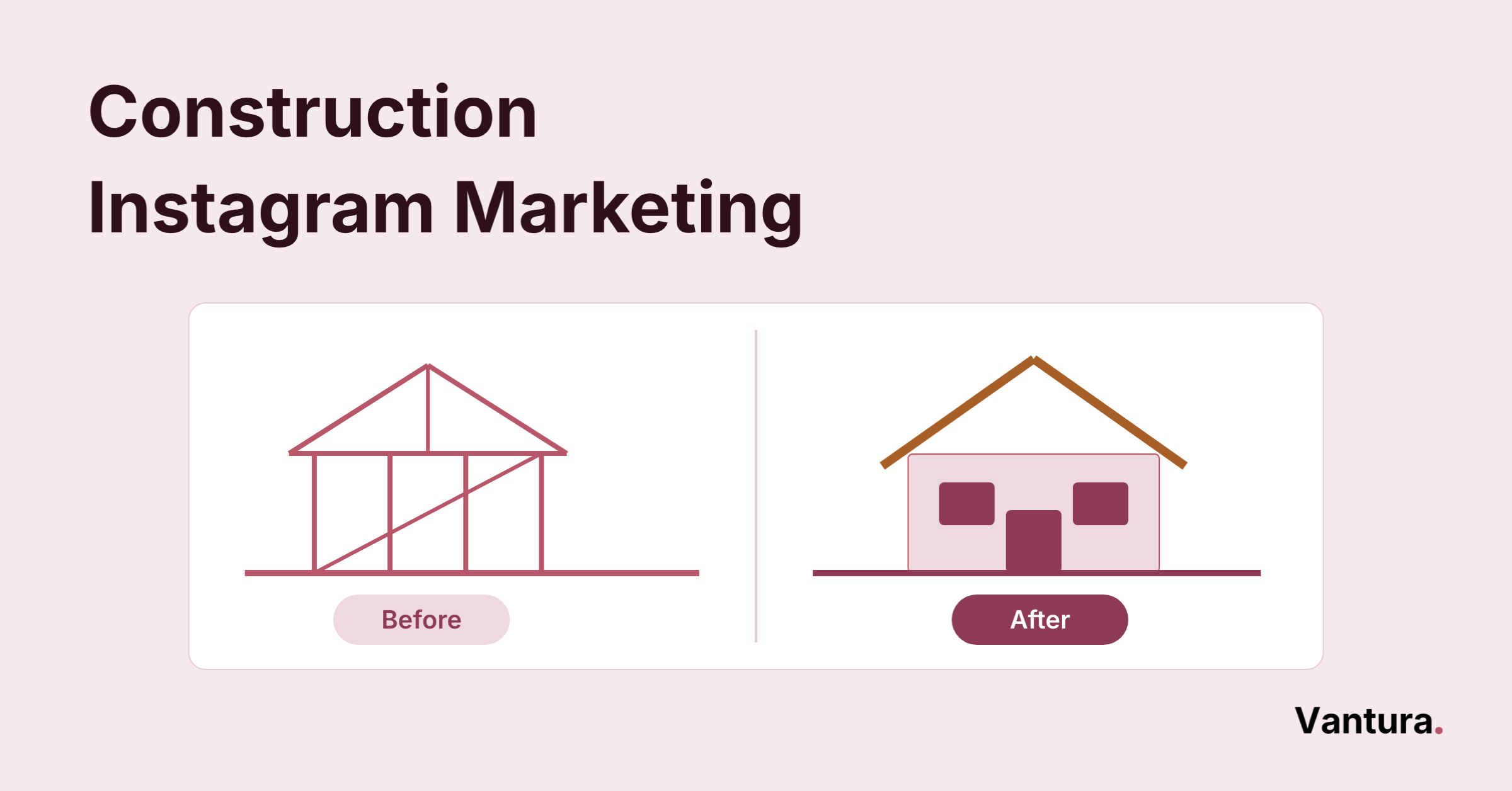
- Project galleries with before-and-after photography
- Email for past clients, subcontractors, and referral partners
- Review platforms like Google and Houzz for social proof
Search behavior for contractors leans local and urgent. That is why the channel mix favors proximity over broad brand awareness.
Off-page work still carries real weight in that mix. According to LinkBuildingHQ, 78.1 percent of SEO professionals report a positive return on investment specifically from their link-building work, one reason local backlinks are worth the time for a construction site.
Channels You Own and Channels You Rent
- The company website and project portfolio, often built with help from an outside marketing outsourcing partner
- The email list of past clients and leads
- Blog and resource content the firm controls outright
- Paid search and social ad accounts
- Review platforms and directory listings
- Third-party lead marketplaces
How Do You Build a Construction Digital Marketing Strategy?
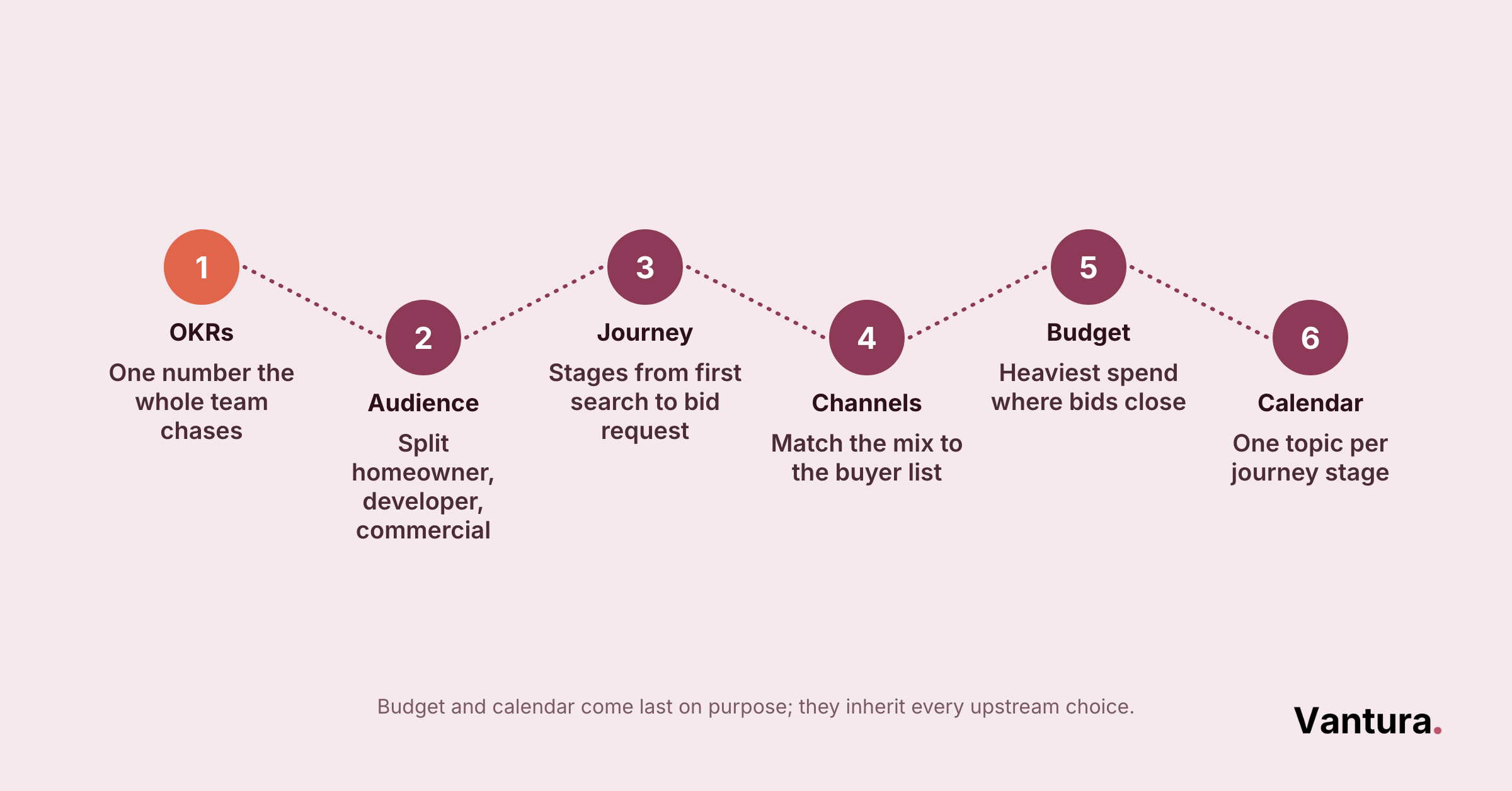
A working framework starts with the business goal, not the channel list. Revenue targets, project size, and service area come first.
The channel mix, budget, and content calendar all get built to hit those numbers.
We walk clients through the same steps for every trade and region. This order stops budget from being spent before goals are set.
How Do You Personalize Construction Marketing at Scale?
Personalization in construction usually means matching content and offers to project type and buyer stage, not one-to-one work. A homeowner researching a kitchen remodel needs a different landing page than a developer requesting a bid packet.
Lessons from real estate marketing on landing pages tend to pay off fastest here, since both fields sell big, considered purchases.
Segmenting the email list and website content by audience gets most of the benefit fast, without building a custom experience for every visitor.
Residential content leans on emotion and trust, project galleries, homeowner reviews, and clear pricing ranges. The goal is to make the decision feel safe for someone spending their own money on their own home.
Commercial content leans on capability and process, licensing, bonding, safety record, and past project scale. Buyers want proof the firm can deliver on schedule before price even enters the talk.
How Do You Align Sales and Marketing in a Construction Strategy?
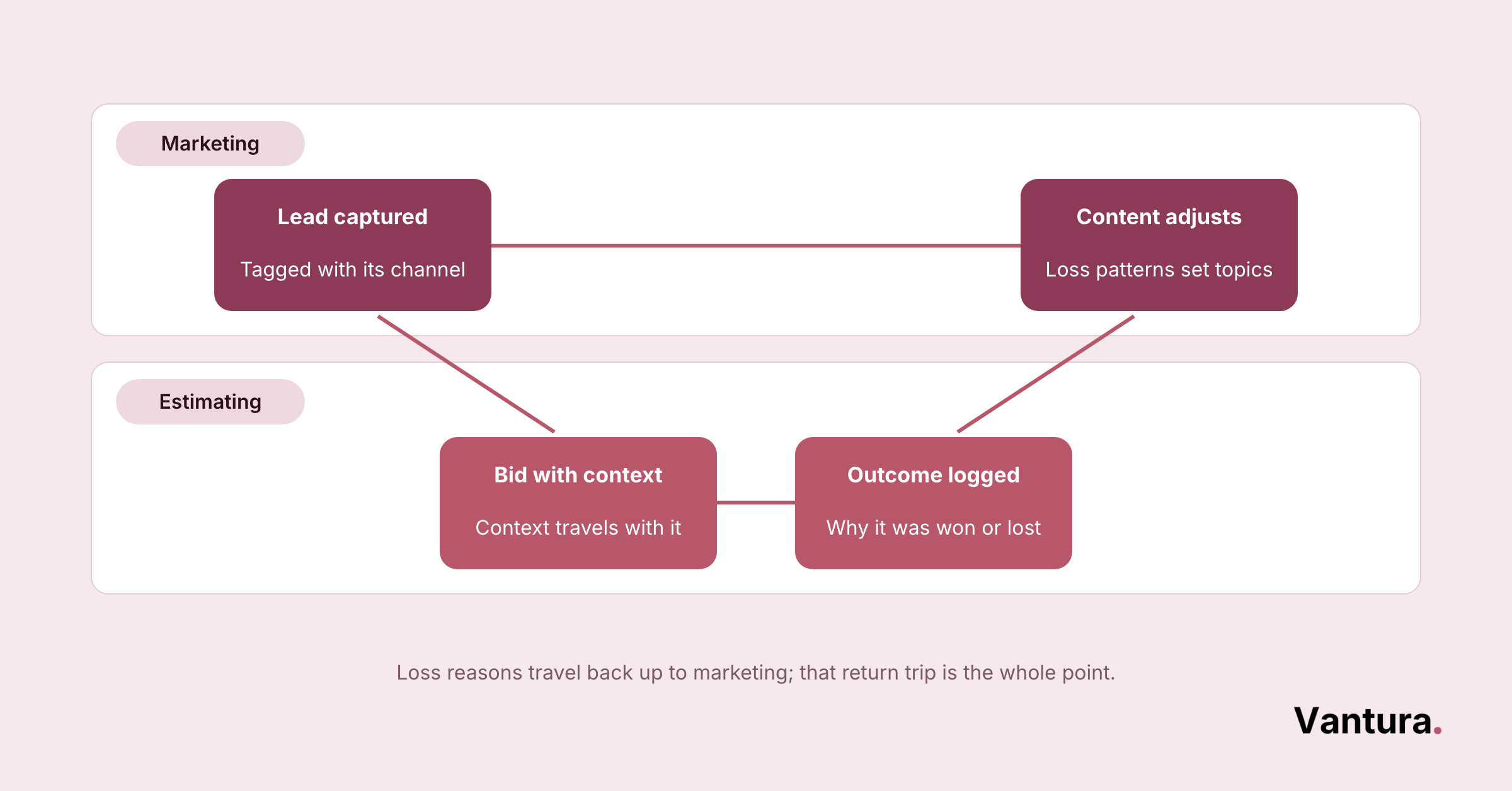
Sales and marketing often disconnect at the handoff. A lead comes in through the website, but the estimating team has no context on what the buyer already read.
Closing that gap is one of the fastest ways to lift close rates without spending another dollar on ads.
- Share a single lead source with both teams
- Log why bids are won or lost, then feed it back to content
- Agree on what counts as a qualified lead before a dispute happens
- Review lost bids together on a fixed monthly schedule
A short weekly sync between the estimator and whoever manages outside marketing support tends to catch mismatches early. That is before a whole campaign runs against the wrong project size.
Essential Tools for a Construction Digital Marketing Strategy
A construction firm does not need a full marketing technology stack to run a solid strategy. A handful of tools covering search visibility, lead capture, and reporting usually cover the whole workflow.
Many firms pair that stack with an outside enterprise marketing program once the foundation is in place.
| Tool Category | What It Handles | Example Platforms |
|---|---|---|
| Local listings | Google Business Profile and directory consistency | Google Business Profile, Yext |
| CRM | Lead tracking from first click to signed contract | HubSpot, Pipedrive |
| Email and automation | Follow-up sequences and past-client nurture | Mailchimp, ActiveCampaign |
| Analytics | Attribution across paid, organic, and referral traffic | Google Analytics, call tracking software |
Keep in mind: more tools rarely means better marketing. A CRM that the estimating team opens every day beats a full stack nobody logs into. Start with the fewest tools that cover lead capture and follow-up.
How Is AI Changing Construction Digital Marketing?
AI tools now handle a lot of the repeat work in a construction marketing plan. They draft review responses, summarize call transcripts, and flag leads that match past won bids.
That frees up estimators and marketers to spend time on the calls a tool cannot make.
Search behavior is shifting too. More buyers now start their research inside AI chat tools instead of a normal search engine.
A firm’s website and project content need to be clear, so these tools can pull accurate answers about services and service area. That is easier when the site already runs on an integrated marketing plan instead of disconnected channels.
Bottom line: AI is a productivity layer on top of a strategy, not a stand-in for one. Firms that get the most value are the ones who already had clean data and a clear process before they added the tools.
How Do You Measure Construction Digital Strategy Performance?
Measurement should tie back to the objectives set in Step #1. Track it at both the lead level and the closed-project level.
A channel that produces cheap leads but few signed contracts is not really performing.
How Direct and Assisted Conversions Differ
- Bid requests submitted through the website
- Calls tracked to a specific campaign
- Signed contracts tied to a known source
- Review page visits before a direct search
- Email opens preceding a phone call
- Repeat visits to a project gallery page
Review both sets of numbers each month, not just the direct wins. This keeps the team from cutting a channel that is quietly supporting closed deals elsewhere.
A basic homeowner-focused analytics setup makes that monthly review far faster to run.
In-House vs Agency for Construction Digital Marketing
The right choice usually comes down to team size, budget, and how many channels the firm needs running at once. A single hire rarely covers SEO, paid media, and content as well as a full agency team can.
| Factor | In-House Team | Agency Partner |
|---|---|---|
| Channel coverage | Usually limited to one or two channels | Full coverage across SEO, paid, content, and email |
| Ramp time | Weeks to months to hire and train | Typically running within the first few weeks |
| Cost structure | Fixed salary plus tools | Scales with scope and budget |
Quick reality check: a hybrid setup works well for many firms. An in-house marketing coordinator manages the day-to-day, while an outside marketing consulting partner handles strategy and specialist work.
How Do You Adapt Your Construction Marketing Strategy to Market Shifts?
Material costs, interest rates, and permit backlogs move faster than most yearly marketing plans expect. A strategy reviewed once a year will lag those swings by months.
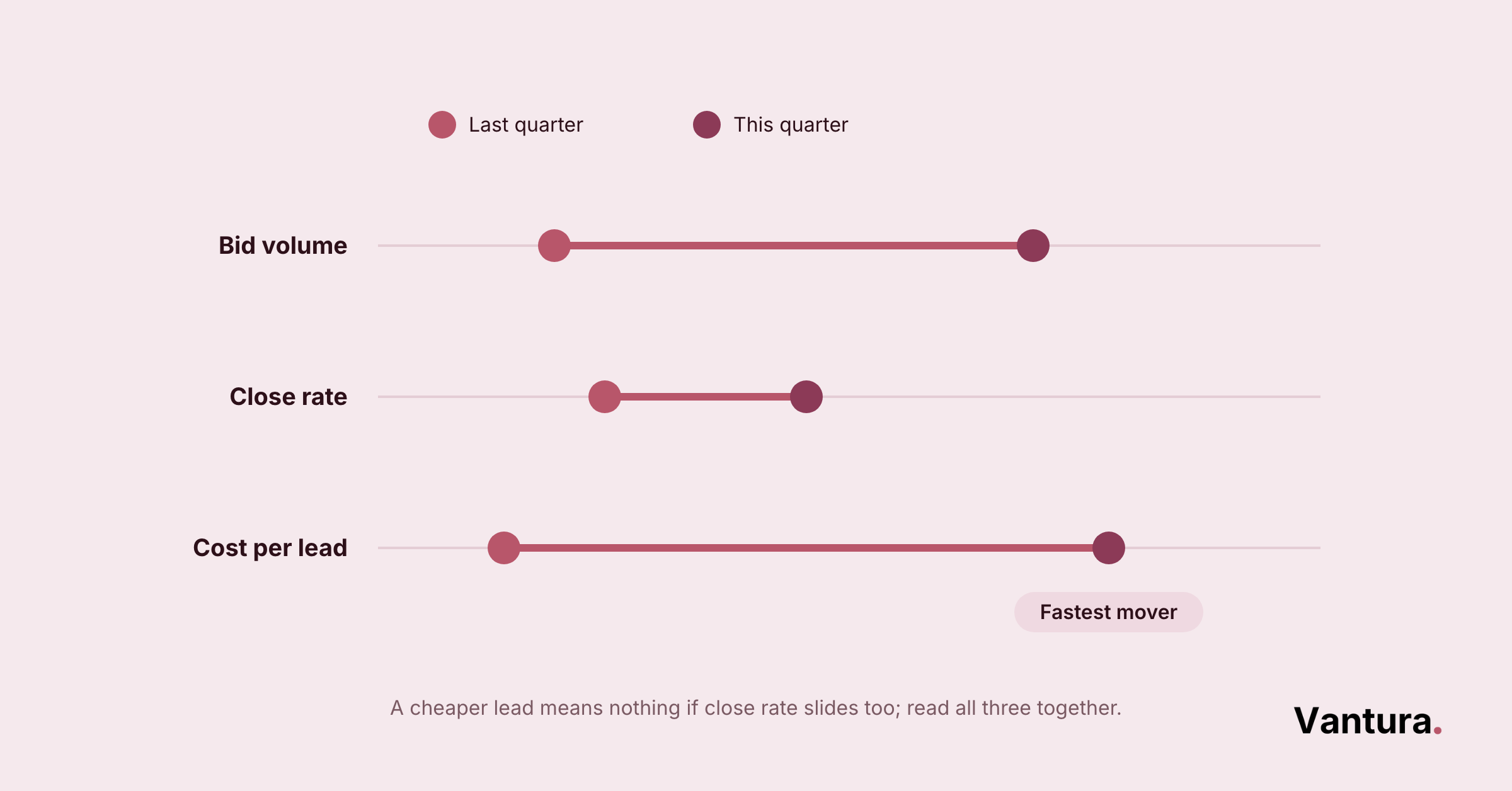
We recommend a quarterly check-in against a rolling marketing audit. Compare bid volume, close rate, and cost per lead against the prior quarter.
When a shift shows up in two check-ins in a row, it is real enough to change budget around.
Keep one flexible budget line unassigned until the quarterly review. This gives the team room to react without pulling money away from channels that are already producing signed work.
Common Construction Digital Marketing Mistakes to Avoid
Most of the mistakes we see repeat across firms of every size. Nearly all trace back to skipping the framework and chasing whatever channel felt urgent that month.
Weak review management is usually near the top of that list.
- Sending paid traffic to a generic homepage instead of a project-specific page
- Leaving the Google Business Profile unclaimed or out of date
- Skipping review requests after a project closes out
- Running every channel at once with no budget priority
- Never reviewing which leads turned into signed contracts
Heads up: a stale Google Business Profile is one of the most common gaps we find during a first audit. It is also one of the fastest to fix, often within a single week.
What Does a Strong Construction Digital Marketing Strategy Look Like in Practice?
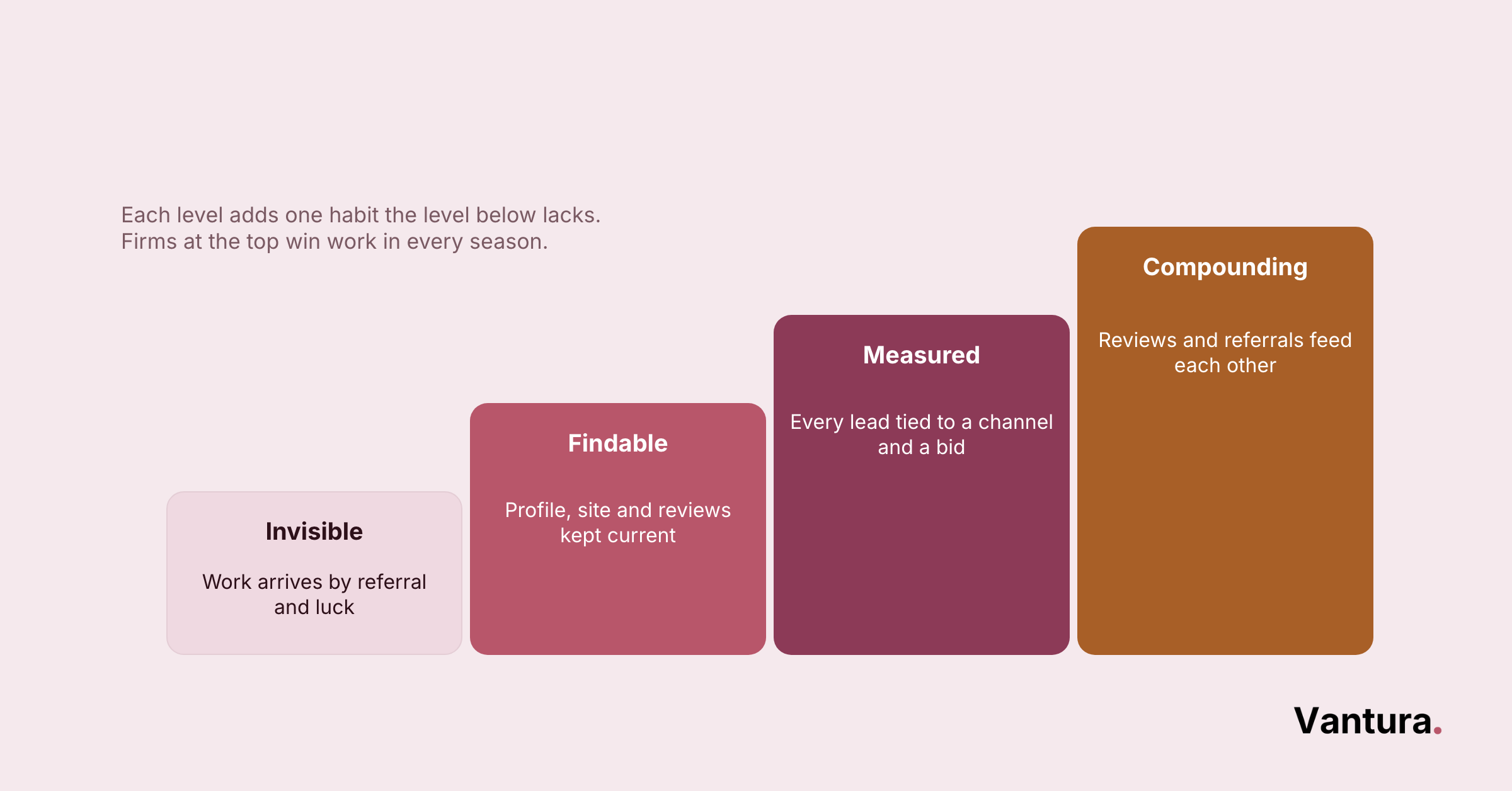
In our experience, the firms that see the clearest results share a pattern, not a single tactic. They set one measurable goal and run a tight channel mix.
They also review the numbers on a fixed schedule instead of waiting for a slow quarter to react.
A remodeling firm that rebuilds its site with real project galleries and steady review requests often sees its close rate improve. That happens within a couple of quarters, well before any big jump in ad spend.
What These Wins Have in Common
- A single owner for the strategy, not a split responsibility
- Content built from real project photos, not stock imagery
- A fixed monthly review of leads against signed work
None of that takes a large budget to start. It takes the framework in this guide, run with discipline, and adjusted based on what the numbers show.
Disclaimer: This article is for general informational purposes only and does not constitute professional marketing, financial, or legal advice. Results from any marketing strategy vary by business, market, and execution, and past performance does not guarantee future outcomes. Consult a qualified professional before making decisions based on this content.